The short answer
Gutter cleaning and gutter brightening describe two different results. Cleaning addresses leaves, twigs, roof grit, and other material inside the gutter system so the cleaning and accessible flow scope can be discussed. Brightening addresses dark streaks, dullness, oxidation, or other discoloration on the visible exterior face.
Neither term proves what a particular provider includes. A written estimate should say whether the work covers trough debris, outlets, accessible downspouts, the exterior face, cleanup, or any repair. If the concern is sagging, leaking, separation, or overflow that remains after debris is cleared, use the repair-or-cleaning guide instead of treating appearance work as a fix.
Use the symptom to choose the conversation
Start with what you can see safely from the ground and what happens during rain.
| What you notice | Likely conversation | What it does not prove |
|---|---|---|
| Leaves, twigs, plant growth, or packed material visible in the trough | Interior gutter cleaning and debris removal. | It does not show whether the downspouts are clear or whether exterior washing is included. |
| Water spilling over an edge during rain | Cleaning and accessible flow checks first, with the overflow location documented. | Overflow alone does not prove the cause is debris; slope, outlet capacity, guards, roof valleys, or downstream drainage may matter. |
| Dark vertical streaks or a dull exterior face while water appears to drain | Exterior washing or brightening questions. | Appearance does not show whether the inside is clean or the downspouts move water normally. |
| Sagging, pulled fasteners, open joints, loose outlets, or leaking seams | Repair assessment, possibly after debris is removed. | Neither routine cleaning nor brightening should be assumed to correct a physical defect. |
| Both debris and exterior streaking | Two clearly listed scopes, if the chosen provider offers both. | One line item called “gutter cleaning” does not automatically include both sides of the gutter. |
See the two conditions on one gutter
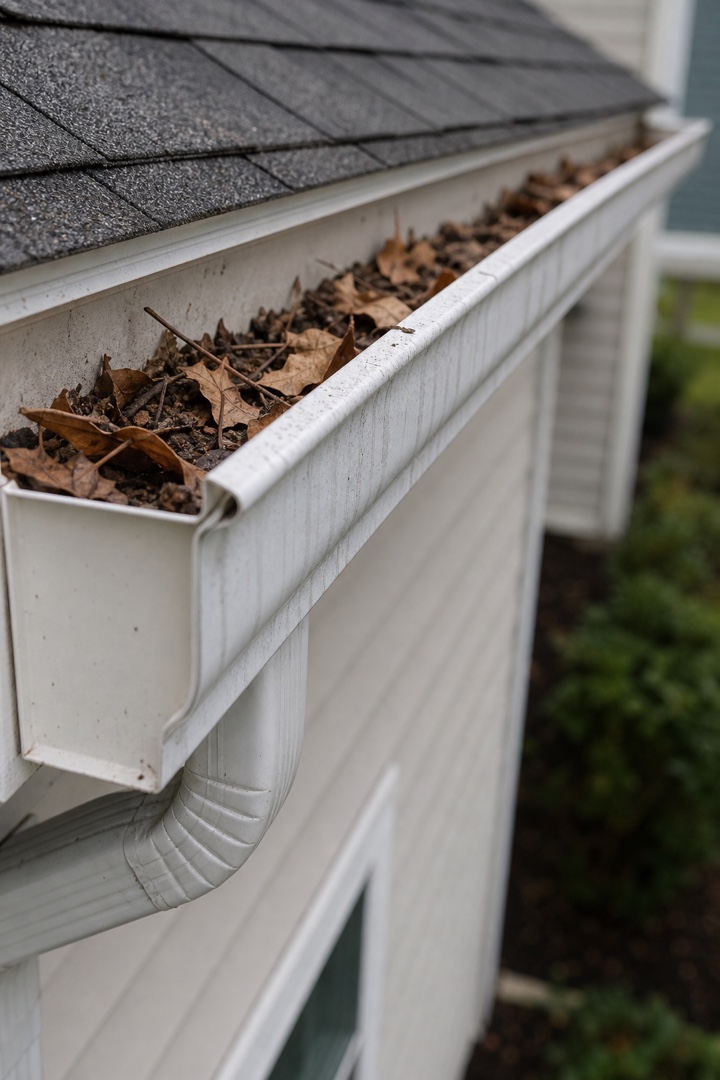
The inside channel and outside face can have different conditions at the same time. Photograph the problem from safe ground level without climbing a ladder or walking the roof. Include one wider image that identifies the side of the home and one closer view when the condition is visible from the ground.
Use the same location names in the call and the estimate: front-left corner, garage downspout, back roof valley, porch run, or another plain description. That makes it easier to compare what was discussed with what appears in writing.
What each scope may include
Provider methods and inclusions vary, so treat this as a comparison checklist rather than a promise.
| Scope question | Interior cleaning | Exterior brightening |
|---|---|---|
| Primary result | Remove specified debris and address the agreed accessible flow path. | Address specified stains or discoloration on the visible gutter face. |
| Areas to name | Troughs, outlets, downspouts, elbows, guards, and detached structures. | Front face, underside, end caps, downspout exterior, corners, and nearby trim. |
| Important exclusions | Buried drains, repairs, guard removal, debris hauling, or inaccessible sections unless listed. | Interior debris, downspout clearing, repair, repainting, or guaranteed stain removal unless listed. |
| Completion question | How will cleared areas, debris handling, inaccessible sections, and observed flow concerns be reported? | What finish limits, test area, protected surfaces, and remaining discoloration will be discussed? |
The Springfield gutter-cleaning page owns the interior cleaning conversation. The estimate checklist can help you compare the same inclusions and exclusions across written quotes.
Why the gutter finish changes the answer
An exterior gutter may be painted aluminum, steel, vinyl, copper, or another finished material. The condition may be surface soil, weathering, oxidation, coating damage, or a mix that is hard to identify from the ground. That is why “make it look new” is not a useful or dependable scope.
Current manufacturer guidance supports a more careful conversation. Rust-Oleum’s technical data sheet for its gutter and exterior-metal cleaner says to test an inconspicuous area and warns that removing contaminants can reveal existing discoloration or oxidation. Senox’s painted-aluminum gutter warranty also distinguishes normal weathering and improper cleaning from covered finish defects.
Ask the chosen provider:
- What gutter material and finish do you believe this is?
- Is the proposed product and method compatible with that surface?
- Will a small, inconspicuous test area be reviewed before the full visible run?
- What discoloration or coating condition may remain after surface cleaning?
- Which nearby siding, roof, windows, plants, pavement, and painted surfaces need protection?
These are scope questions, not a do-it-yourself chemical recipe. Product labels, material guidance, site conditions, and the provider’s actual process should control the work.
Ask about wash water and runoff
Exterior appearance work can involve wash water, loosened material, and a cleaning product. Ask how those will be managed around landscaping, pavement, downspout discharge points, and storm drains.
Springfield’s stormwater ordinance restricts discharges that cause or tend to cause pollution in the municipal stormwater system or protected waters. The practical estimate question is: How will wash water, loosened material, and any cleaner be kept from entering a storm drain or another protected water path, and what local requirements apply here?
Do not assume that directing runoff toward a yard, street, inlet, or downspout is acceptable for every product and property. Get the method and exclusions from the chosen provider.
Build one clear estimate request
Before calling, collect:
- the property address and number of stories on each side;
- the exact side or corner where debris, overflow, streaking, or a defect appears;
- whether the concern happens during rain or is visible in dry weather;
- safe ground-level photos of the whole run and the closer condition;
- gutter material or age if known, without guessing;
- guard type and downspout termination if visible;
- gates, landscaping, vehicles, overhead lines, decks, or other access constraints;
- the result you want: interior debris removal, accessible flow review, exterior appearance work, repair assessment, or separately listed scopes.
Then ask for each inclusion and exclusion in writing. If both interior cleaning and exterior brightening are available, request separate line items so the result, material limitations, cleanup, and approval process stay clear.
For appointment planning, the gutter-cleaning time guide explains why stories, guards, access, debris, downspouts, cleanup, and added work can change the service window.