The short answer
You may not need to be home for gutter cleaning, but there is no universal unattended-service policy. The answer depends on the provider you choose, the property, access to every agreed work area, pets and obstacles, how questions or discoveries will be handled, and how completion and payment are confirmed.
Ask before the appointment. A clear access and communication plan can make being away workable in some situations, while an unclear scope or property-specific concern may make being present the better choice.
When being away may be workable
| Being away may be workable when | Being home may help when |
|---|---|
| The chosen provider explicitly agrees that no one must be present. | The provider requires an adult present or has not confirmed its policy. |
| Every agreed exterior work area can be reached without entering the home or using an unapproved access point. | Roof, courtyard, balcony, locked area, interior access, or another property feature is unclear. |
| Gates, vehicles, pets, furniture, decorations, and landscaping have an agreed plan. | Pets, gates, vehicles, neighbors, tenants, or fragile property need active coordination. |
| A responsible contact will be reachable through the method and window confirmed with the provider. | Active leaks, recurring overflow, damage, or repair decisions may need an on-site explanation. |
| The scope, approval limit, handoff, and payment process are understood in advance. | The job may expose conditions that should not proceed without a walkthrough or approval. |
This table is a decision aid, not a promise that unattended work is offered. The provider’s actual policy controls the appointment.
Prepare an access handoff
Keep the handoff practical and avoid sending sensitive access information until the provider has confirmed an appropriate method.
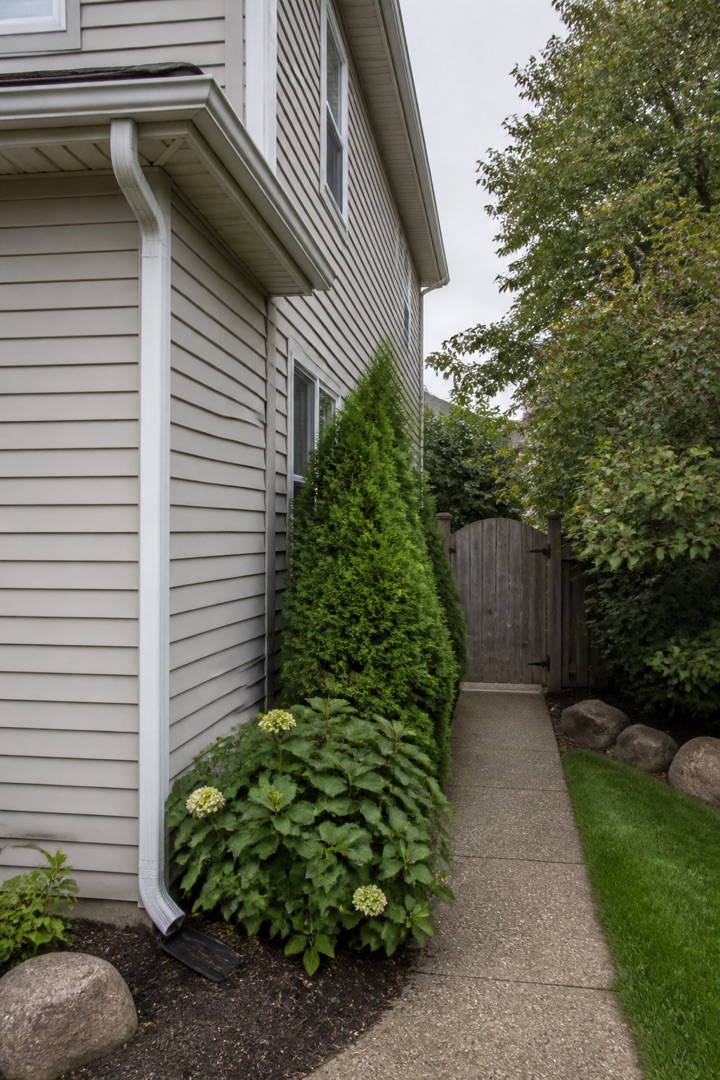
- Identify every side of the home included in the scope and any area that may be difficult to reach.
- Discuss gates, fences, narrow side yards, decks, landscaping, overhead lines, parked vehicles, and exterior obstacles.
- Confirm how pets will be kept away from work areas without assuming a particular provider procedure.
- Share property-manager, tenant, neighbor, parking, or community rules that could affect access.
- Mark visible overflow, staining, sagging, loose pieces, or downspout concerns with safe ground-level photos.
- Name the person authorized to answer questions or approve a change in scope.
- Agree on how the property will be left if work cannot reach an area or must stop.
Do not publish or casually message gate codes, alarm details, keys, or other sensitive access information. Ask the chosen provider how it handles necessary details securely.
Confirm these provider policies directly
Separate what you prepare from what the provider must confirm:
- Presence: Must an adult be home at arrival, during work, at handoff, or at payment?
- Access: Does any agreed area require entry through a garage, home, locked gate, balcony, or other controlled space?
- Water and power: Are either needed, and who is responsible for access?
- Notifications: How are arrival, delay, questions, completion, or inability to access an area communicated?
- Photos or walkthrough: What completion record, if any, is included?
- Discoveries: What happens if loose gutters, damaged fascia, buried-drain concerns, or repair needs appear?
- Approval: Who may approve added work, by what method, and up to what amount?
- Payment: When and how is payment handled if the homeowner is away?
None of these policies should be assumed from another provider’s website. Get the answers for the actual appointment.
When being home may save friction
Being present can help when the problem is hard to explain from photos, multiple elevations or properties are involved, active leaking or damage needs to be reviewed, a repair decision may follow cleaning, or access cannot be resolved ahead of time. It may also be useful when a new homeowner does not yet know where downspouts discharge or which areas have overflowed.
That still does not mean the homeowner should direct ladder or roof work. The useful role is to explain the property, confirm the agreed scope, remain available for decisions, and review the handoff.
Plan the call
Have the address, story count, guard type, access notes, pet and vehicle considerations, visible symptoms, safe photos, preferred communication method, and the person authorized to approve changes ready. Use the Springfield gutter-cleaning page for service-scope questions and the gutter-cleaning checklist for the broader estimate conversation.
If timing is also uncertain, the service-window guide explains which property details help make that conversation more realistic without inventing a universal duration.